

Written by Tou Calo Nutrition Team · Vulcan Labs · Updated June 2026. General nutritional information only — not personalised medical advice.
Learning how to track macros is one of the most effective things you can do for body composition — more effective than simply counting calories alone. Tracking macros tells you not just how much you ate, but what you ate — the protein that preserves muscle, the carbs that fuel training, the fat that supports hormones. This step-by-step guide gives you everything you need to start tracking macros correctly from day one.
Before you start: Tracking macros only works when you know your daily targets. Use our free BMR calculator to find your calorie baseline, then set your macro targets from there. Without personalised targets, tracking macros is just a food diary.

What are macros and why track them?
Macros — short for macronutrients — are the three main categories of nutrients that provide energy: protein, carbohydrates and fat. Every food you eat is made up of some combination of these three. When you track macros, you are measuring how many grams of each you consume per day — not just total calories.
Why does this matter? Because the same 2,000 calories can produce very different results depending on how they are split:
- 2,000 kcal with 50g protein → muscle loss, constant hunger, poor recovery from exercise
- 2,000 kcal with 160g protein → muscle preservation, better satiety, improved body composition
Tracking macros gives you this level of control. It is the difference between losing weight and losing fat specifically — while keeping the muscle that determines how you look and perform.
| Macro | Calories per gram | Primary function |
|---|---|---|
| 🥩 Protein | 4 kcal/g | Muscle building and repair · satiety · immune function |
| 🍚 Carbohydrates | 4 kcal/g | Primary energy source · fuels brain and exercise |
| 🥑 Fat | 9 kcal/g | Hormone production · vitamin absorption · satiety |
Step 1 — Set your personal macro targets before you start tracking
The most common mistake when learning how to track macros is starting to log food before setting personalised targets. Without a target, you have no way to know whether what you ate was too much, too little, or just right.
Calculate your calorie baseline first
Your macro targets must be built on your personal calorie needs — not a generic number from the internet.
- Find your BMR: Use our free BMR calculator to find how many calories your body burns at complete rest. This is your absolute floor — you should never eat below this number.
- Find your TDEE: Use our TDEE calculator to multiply your BMR by your activity level. This is your maintenance number — what you need to eat to stay the same weight.
- Set your calorie goal: Use our calorie deficit calculator to subtract 400–500 calories for fat loss, add 250–500 for muscle gain, or stay at TDEE for maintenance.
- Split into macros: Divide your total calories between protein, carbs and fat based on your goal (see Step 3 below).
Calculate your targets in 60 seconds
Find your personal calorie baseline before setting macro targets.
Use BMR Calculator →Step 2 — How to track macros accurately: 4 methods compared
Once you have your targets, you need a way to measure what you are actually eating. Here is how to track macros using each available method — and which works best.
| Method | How it works | Accuracy | Best for |
|---|---|---|---|
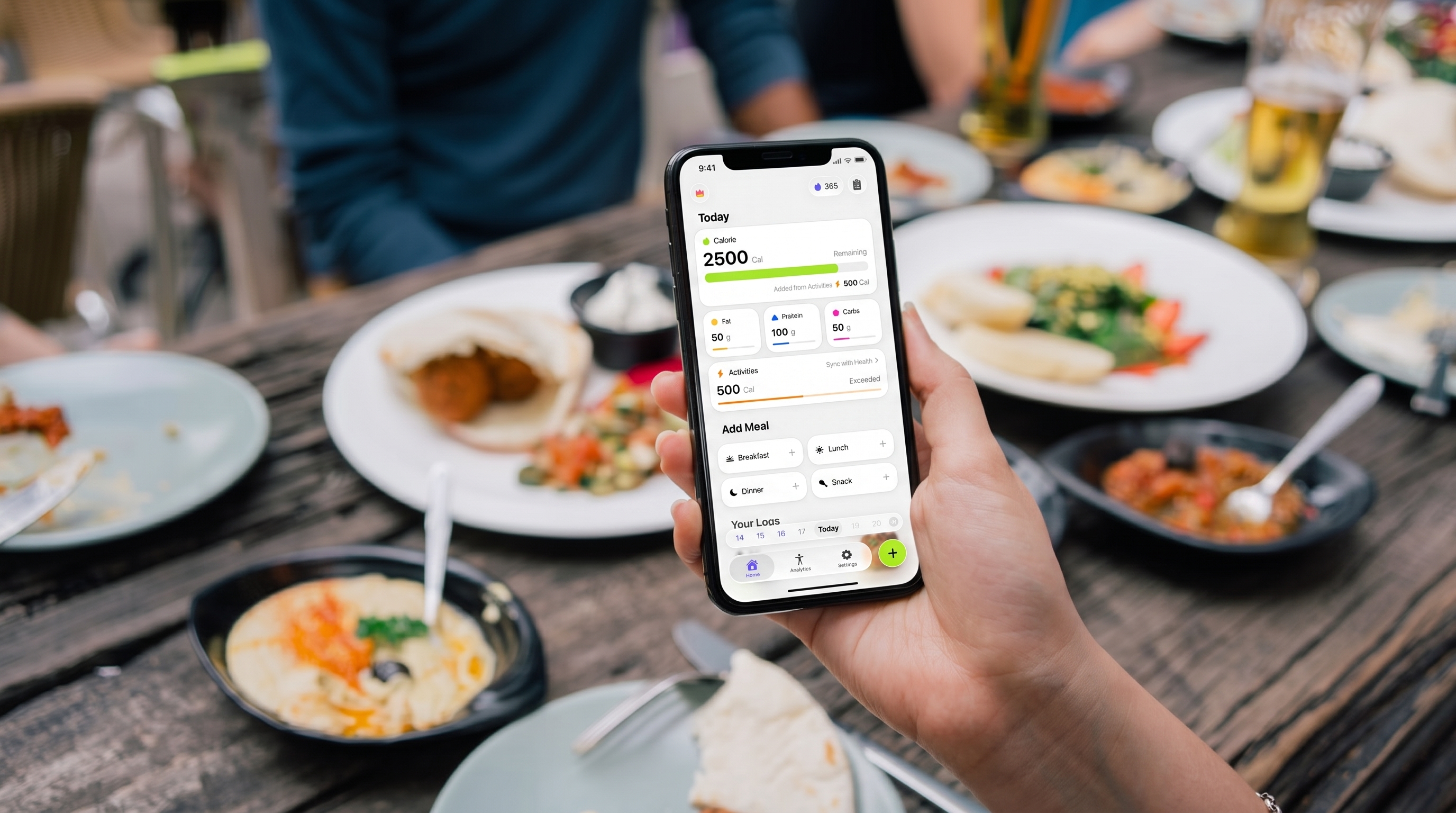
| 📸 AI photo logging | Snap a photo — AI identifies food and logs macros automatically | ±3–5% | Daily consistency · restaurant meals · home cooking |
| 🔍 Manual search | Search a food database, select item, enter portion size | ±10–20% | Packaged foods with known weights |
| 📊 Kitchen scale | Weigh all ingredients, log by gram against verified data | ±2–3% | Maximum precision · meal prep · clinical targets |
| 🏷️ Barcode scan | Scan product barcode — macros populated automatically | ±1–2% | Packaged and branded food products |
The consistency problem: Research consistently shows people underestimate calorie intake by 20–40% when logging manually from memory. The biggest variable in how to track macros effectively is not the method you choose — it is whether you actually use it every day. AI photo logging (Tou Calo) has the highest daily adherence rate because it removes nearly all friction from the process.
Practical tips for accurate macro tracking
- Log before or during eating — not from memory at end of day. Memory-based logging is responsible for most macro tracking errors.
- Weigh key calorie-dense foods for the first 2 weeks — nuts, nut butters, oils and cheese are the most commonly underestimated. After 2 weeks, you will have calibrated visual portion estimation for these foods.
- Log sauces, dressings and cooking oils — these add 100–400 invisible calories per day that most people tracking macros miss entirely.
- Track consistently 7 days a week — tracking 5 days and guessing on weekends eliminates most of the benefit. Weekend calories are often 30–50% higher than weekday calories.
Step 3 — Best macro ratios by goal
There is no single correct way to track macros — the right split depends on your goal. Here are the evidence-based macro ratios for the three most common goals.
| Goal | Protein | Carbs | Fat | Key priority |
|---|---|---|---|---|
| Fat loss | 1.6–2.2g/kg · 35% | 35–40% | 25–30% | Hit protein to preserve muscle in deficit |
| Muscle gain | 1.6–2.2g/kg · 30% | 45–55% | 20–25% | Higher carbs fuel training and recovery |
| Maintenance | 1.4–1.8g/kg · 25–30% | 40–50% | 25–30% | Balanced split matching activity level |
Converting percentages to grams — example for fat loss at 1,800 kcal:
| Macro | % of 1,800 kcal | Calories | Grams per day |
|---|---|---|---|
| Protein | 35% | 630 kcal | 158g |
| Carbs | 38% | 684 kcal | 171g |
| Fat | 27% | 486 kcal | 54g |
Step 4 — Best foods for hitting each macro when tracking
Knowing how to track macros is one thing — knowing which foods to eat to hit your targets consistently is another. These are the most efficient foods for each macro.
🥩 Best protein sources — highest protein per calorie
- Chicken breast — 31g protein per 100g · 165 kcal
- Egg whites — 11g protein per 100g · 52 kcal (best protein-to-calorie ratio)
- Greek yogurt (full-fat) — 10g per 100g · 97 kcal
- Canned tuna — 25g per 100g · 116 kcal
- Cottage cheese — 11g per 100g · 98 kcal
- Whey protein powder — 20–25g per scoop · 120 kcal
🍚 Best carbohydrate sources — complex, high-fibre
- Oats — 66g carbs per 100g dry · slow-releasing energy
- Brown rice — 23g carbs per 100g cooked
- Sweet potato — 20g carbs per 100g · high vitamin A
- Whole grain bread — 40g carbs per 100g · convenient
- Banana — 23g carbs · ideal pre-workout fast carb
- Lentils — 20g carbs + 9g protein per 100g cooked
🥑 Best fat sources — healthy, nutrient-dense
- Avocado — 15g fat per 100g · vitamins E and K
- Almonds — 50g fat per 100g · calorie-dense snack
- Olive oil — 14g fat per tablespoon · 119 kcal
- Salmon — 12g fat per 100g + omega-3
- Whole eggs — 10g fat + 13g protein per 2 eggs
Common mistakes when learning how to track macros
- Not setting targets before tracking: Logging food without knowing your daily macro goals means the data is meaningless. Set targets first using our BMR calculator and TDEE calculator.
- Tracking calories only, ignoring macros: Two diets with identical calories can produce completely different results depending on protein intake. Always track all three macros — protein, carbs and fat — not just total calories.
- Not tracking on weekends: This is the single biggest reason people who learn how to track macros fail to see results. Weekend eating typically adds 30–50% more calories than weekday eating — and it goes untracked.
- Ignoring liquid calories: Coffee drinks, juices, smoothies, protein shakes and alcohol all contain macros. A single latte adds 10–15g fat and 15g carbs. Log everything that passes your lips.
- Obsessing over perfection: You do not need to hit your macros exactly — within ±10g protein and ±15g carbs or fat is close enough to produce results. Consistency over time matters far more than daily precision.
- Giving up after a bad day: One day over your macro targets will not undo your progress. The mistake is treating a bad day as failure and abandoning tracking entirely. One day is noise — the weekly average is signal.
How to track macros — FAQ
How do I start tracking macros for beginners?
Start with these 4 steps: (1) calculate your BMR using our free BMR calculator, (2) find your TDEE using our TDEE calculator, (3) set your daily calorie and macro targets based on your goal, (4) log every meal using a photo-based app like Tou Calo. Do this consistently for 2 weeks before making any adjustments — you need at least 2 weeks of data to see meaningful patterns.
How many grams of protein should I track per day?
The evidence-based target for most active adults is 1.6–2.2g of protein per kg of bodyweight per day. For a 70 kg person, that is 112–154g of protein daily. Distribute this across 4–5 meals of 30–40g each for maximum muscle protein synthesis. Protein is the most important macro to hit — prioritise it above carbs and fat when tracking macros.
Is tracking macros the same as counting calories?
No — tracking macros is more precise than counting calories. Calorie counting tells you the total energy you consumed. Macro tracking tells you the breakdown of protein, carbs and fat within those calories. Two meals can have identical calories but completely different effects on muscle retention, hunger levels and body composition. Tracking macros gives you the information to control these outcomes.
How long does it take to learn how to track macros?
Most people become comfortable with macro tracking within 2–3 weeks. The first week involves learning portion sizes and finding your rhythm. By week 2, logging becomes significantly faster. By week 3, many people can estimate macros for their regular meals without looking them up. Using photo logging (Tou Calo) cuts this learning curve dramatically — AI identifies the food and logs macros automatically in 3 seconds.
Do I need to track macros every day forever?
No. Many people track macros consistently for 8–16 weeks, build strong nutritional awareness, then track intermittently to check in on their habits. The goal of tracking macros is to build an accurate understanding of the macros in your regular foods — at that point, many people can maintain their results with occasional spot-checking rather than daily logging.
Disclaimer: This guide provides general nutritional information on how to track macros. Individual needs vary based on age, health status and activity level. Consult a registered dietitian for personalised macro targets.
Written by Tou Calo Nutrition Team — Vulcan Labs
The team behind Tou Calo AI Calorie Counter. We build evidence-based nutrition guides and tools that make hitting your daily macro targets effortless.
Related tools:
🔬 BMR Calculator — your resting calorie baseline
⚡ TDEE Calculator — total daily calorie burn
🎯 Calorie Deficit Calculator — your exact fat loss target
The easiest way to track macros
Snap your food.
Macros logged in 3 seconds.
The hardest part of tracking macros is consistency. Tou Calo removes the friction — AI identifies your food from a photo and logs exact protein, carbs and fat automatically. No manual entry, no database searching.