

Written by Tou Calo Nutrition Team · Vulcan Labs · Updated August 2026. Nutrition data sourced from USDA FoodData Central.
“Rolls” covers a wide range of foods — dinner rolls, bread rolls, spring rolls, sushi rolls and more — each with very different calorie counts. A small plain dinner roll (28g) contains approximately 78–87 calories. A large bakery bread roll at 100g contains approximately 280–310 calories. A fried spring roll at 100g can exceed 400 calories. This guide covers calories for every major type of roll in one place, with a full nutrition breakdown and practical guidance for tracking them accurately.
Quick reference — calories in rolls by type:
Small dinner roll (28g): ~87 kcal · Standard bread roll (60g): ~180 kcal · Large bread roll (100g): ~280 kcal
Spring roll (fried, 100g): ~400 kcal · Fresh Vietnamese spring roll (100g): ~130 kcal · Sushi roll (6 pcs): ~200–350 kcal
Use our TDEE calculator to find your daily calorie budget.

In this guide
- Dinner rolls — calories and nutrition
- Bread rolls — calories by size
- All roll types compared
- White vs wholemeal — which is better?
- FAQ
Dinner rolls — calories and nutrition facts
One dinner roll is generally considered a single serving, which provides around 80–100 calories depending on the size and recipe. USDA data for a standard commercially prepared plain dinner roll (28g, approximately 2 inches square) shows the following:
| Nutrient | Per roll (28g) | Per 100g |
|---|---|---|
| Calories | 87 kcal | 310 kcal |
| Carbohydrates | 14.4g | 51.5g |
| Protein | 2.7g | 9.6g |
| Fat | 1.9g | 6.8g |
| Fibre | 0.6g | 2.1g |
| Sugar | 1.4g | 5.1g |
| Sodium | 146mg | 521mg |
A plain dinner roll is low in fat and provides a modest amount of protein. Its main limitation is fibre — at only 0.6g per roll, white dinner rolls contribute minimally to the daily 25–38g fibre target. Whole wheat dinner rolls offer 3× more fibre (2g vs 0.6g per roll) and more B vitamins, iron and magnesium. Use our BMR calculator to find your daily calorie baseline.
Bread rolls — calories by size
A typical serving size is one standard bread roll (about 50g), which contains approximately 150–180 calories depending on the recipe. Bread roll sizes vary significantly across bakeries and supermarkets — here is the calorie range by weight:
| Roll size | Weight | Calories (white) | Calories (wholemeal) |
|---|---|---|---|
| Mini / dinner roll | 25–30g | 78–93 | 65–80 |
| Standard bread roll | 50–60g | 155–186 | 130–160 |
| Medium bakery roll | 70–80g | 217–248 | 180–210 |
| Large bread roll / sub roll | 100g | 280–310 | 240–260 |
| Extra large / burger bun | 120–130g | 370–400 | 310–340 |
The practical takeaway: weigh your roll to know its calories accurately. A “standard bread roll” at a supermarket or bakery can weigh anywhere from 45g to 110g — a range of approximately 140–340 calories. Without weighing, it is difficult to log accurately. Tou Calo’s AI camera can estimate the roll size from a photo for a fast visual estimate.

Track meals in 3 seconds — just snap.
AI reads your plate and logs every calorie and macro instantly. Free on iOS.
All roll types compared
| Roll type | Serving | Calories | Key notes |
|---|---|---|---|
| Dinner roll (white) | 1 roll (28g) | 87 | Low fat, low fibre |
| Dinner roll (wholemeal) | 1 roll (28g) | 75 | 3× more fibre than white |
| Bread roll / bap (standard) | 1 roll (60g) | 186 | Varies significantly by bakery |
| Brioche roll | 1 roll (55g) | 200 | Higher fat from butter and eggs |
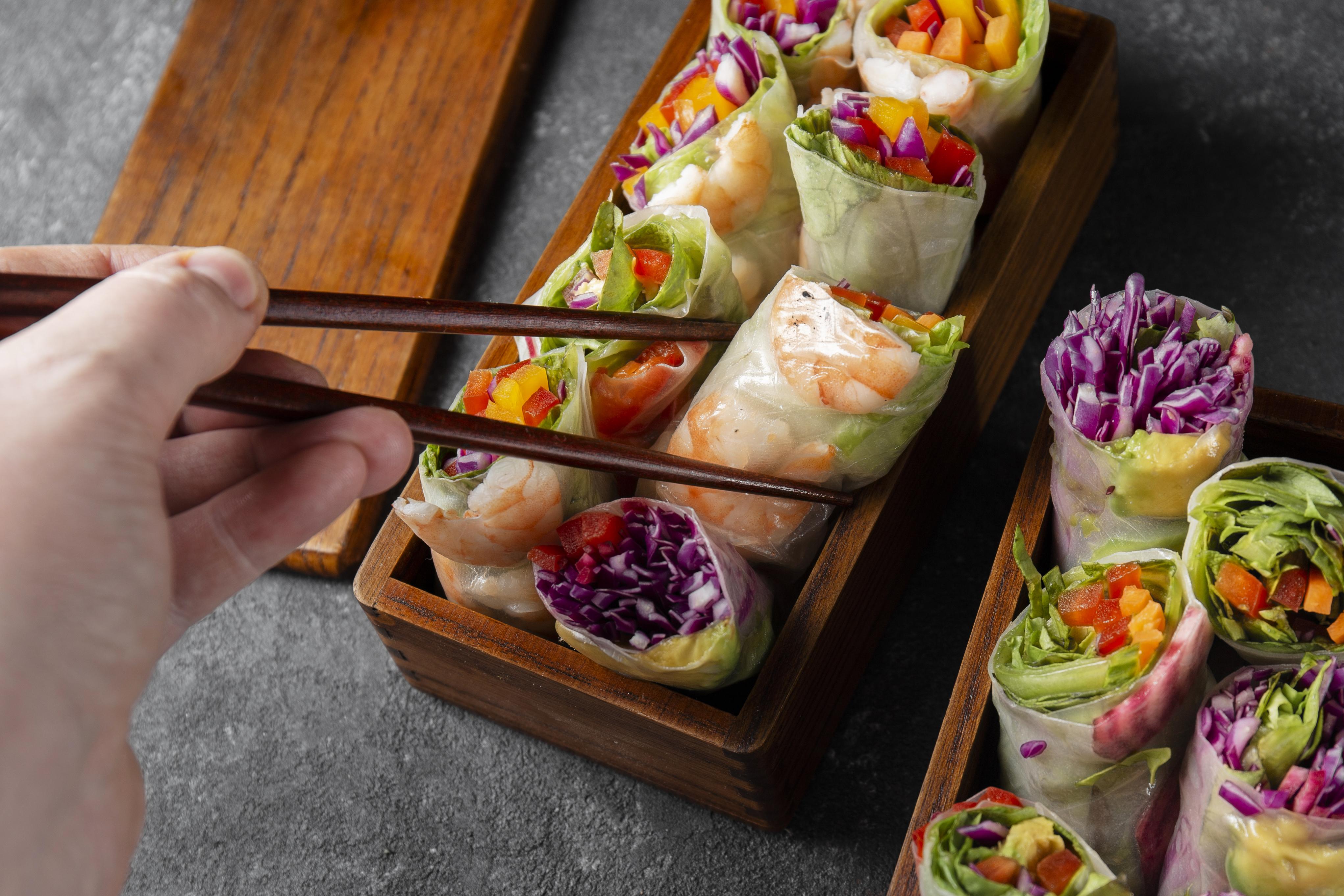
| Vietnamese fresh spring roll | 1 roll (100g) | ~130 | Rice paper, vegetables, shrimp — low calorie |
| Fried spring roll (Chinese) | 1 roll (100g) | ~400 | High fat from deep frying |
| Sushi roll — California (6 pcs) | 6 pieces (~150g) | ~200 | Rice + filling — varies by topping |
| Sushi roll — tempura (6 pcs) | 6 pieces (~170g) | ~350 | Fried filling + sauce significantly increases calories |
White vs wholemeal bread rolls — nutrition comparison
Whole wheat rolls are nutritionally superior — they provide 3× more fibre (2g vs 0.6g per roll), more B vitamins, iron, magnesium and beneficial phytochemicals. The fibre slows digestion and improves blood sugar control.
| Nutrient (per 28g roll) | White roll | Wholemeal roll | Winner |
|---|---|---|---|
| Calories | 87 | 75 | Wholemeal (12 kcal less) |
| Fibre | 0.6g | 2.0g | Wholemeal (3× more) |
| Protein | 2.7g | 3.0g | Wholemeal (slightly more) |
| Carbs | 14.4g | 12.5g | Wholemeal (fewer net carbs) |
| Sodium | 146mg | 148mg | Draw |
Wholemeal rolls win across every major nutritional metric — fewer calories, more fibre, more protein and fewer net carbs than white rolls. The calorie difference per roll is small at 12 kcal, but the fibre difference (0.6g vs 2.0g) is meaningful for satiety and blood sugar management. If wholemeal rolls are available, they are the better choice at essentially the same calorie count. Use our calorie deficit calculator to set your daily target and plan bread portions within it.
Calories in rolls — FAQ
How many calories are in a bread roll?
A typical serving size is one standard bread roll (about 50g), which contains approximately 150–180 calories depending on the recipe. A small dinner roll (28g) contains approximately 87 calories. A large bakery roll at 100g contains approximately 280–310 calories. The most accurate approach is to weigh the roll and multiply by the per-100g calorie figure for the specific type — white rolls average 310 kcal per 100g, wholemeal rolls approximately 270 kcal per 100g.
How many calories in a dinner roll?
A small plain dinner roll (approximately 28g, 2 inches square) contains approximately 78–87 calories. Most commercially prepared dinner rolls are this size. Larger restaurant dinner rolls at 40–50g contain approximately 125–155 calories. The calorie count rises further if the roll is made with butter, brioche-style, or brushed with an egg wash — these recipes add 15–30 calories per roll compared to a plain flour roll.
How many calories in a spring roll?
Spring roll calories vary enormously by type. A fresh Vietnamese spring roll (gỏi cuốn) made with rice paper, vegetables, herbs and shrimp contains approximately 100–130 calories per roll (100g). A Chinese fried spring roll of the same weight contains approximately 380–420 calories — roughly 3× higher because of the fried pastry wrapper and oil absorption. If you are ordering spring rolls at a restaurant and do not know whether they are fresh or fried, the calorie difference is significant enough to ask.
How many calories in a sushi roll?
A standard sushi roll (6 pieces) contains approximately 200–250 calories for a basic roll such as cucumber or tuna. A California roll (6 pieces) contains approximately 250–300 calories. Tempura or battered rolls with heavy sauces can reach 400–500 calories for 6 pieces. The biggest calorie variables in sushi rolls are whether the filling is fried, whether mayonnaise-based sauces are used and how much rice is packed into each piece.
Are bread rolls fattening?
Bread is not inherently fattening — weight gain comes from excess calories, not specific foods. One dinner roll at 87 calories fits moderate eating plans when balanced with protein and vegetables. Whether rolls contribute to weight gain depends on whether your total daily intake exceeds your TDEE — not on whether you eat bread. Use our TDEE calculator to find your maintenance calories and our calorie deficit calculator to set a fat loss target if relevant. A single roll at 87–186 calories is a small fraction of most daily budgets.
Disclaimer: Nutrition values are sourced from USDA FoodData Central for standard commercially prepared rolls. Values for specific bakery products, homemade rolls and restaurant items will vary. Spring roll and sushi roll values are estimates based on standard recipes.
Written by Tou Calo Nutrition Team — Vulcan Labs
The team behind Tou Calo AI Calorie Counter.
Related tools:
BMR Calculator — your resting calorie baseline
TDEE Calculator — your total daily calorie burn
Calorie Deficit Calculator — your fat loss target

calories and macros in 3 seconds.